
home > treatments > brain metastases
Brain metastases
Cancer that has spread to the brain
What are brain metastases?
Brain metastases (secondary tumours in the brain) are tumours that do not originate in the brain itself, but come from a cancer elsewhere in the body. Cancer cells reach the brain through the bloodstream and continue to grow there.
They occur most often with lung, breast and skin cancer (melanoma), kidney cancer and bowel cancer. Sometimes the brain metastasis is the first sign that a cancer is present somewhere in the body.
It is important to distinguish this from a primary brain tumour (such as a glioma), which arises in the brain itself. The treatment and course are fundamentally different.
What symptoms do they cause?
The symptoms depend on the location and size of the metastasis and on the swelling (oedema) around it. Common symptoms are:
- Headache, often in the morning and getting worse
- Loss of strength or altered sensation on one side of the body
- Problems with speech, vision or balance
- An epileptic seizure
- Confusion, memory problems or change in behaviour
- Nausea and vomiting
Some metastases cause no symptoms and are discovered by chance on a scan done as part of cancer treatment.
Warning signs: a (first or new) epileptic seizure, rapidly worsening headache with vomiting, sudden loss of strength, speech problems or increasing drowsiness. In that case, contact the hospital or call 112.
How is the diagnosis made?
An MRI of the brain with contrast is the most important investigation. It shows us how many metastases there are, where they are, how large they are and how much swelling they cause.
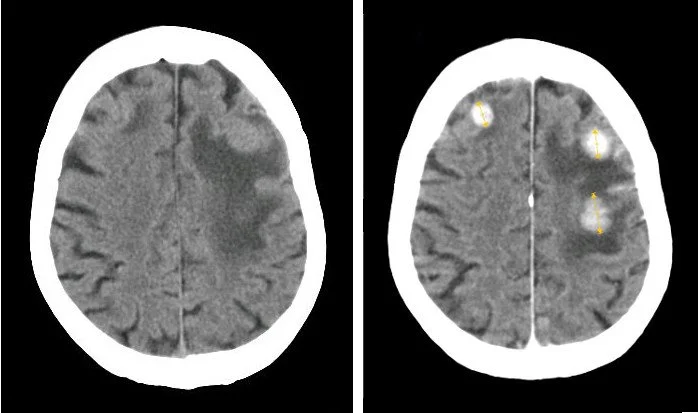
If the cancer is not yet known, its origin is sought with a CT scan of the neck, chest and abdomen or a PET scan. If nothing is found there, a biopsy or removal of the brain lesion may be needed to examine the tissue.
All findings are discussed at the multidisciplinary oncology meeting (MOC), where the neurosurgeon, radiation oncologist, oncologist, neurologist and radiologist draw up a treatment plan together. So you do not receive advice from one doctor, but from a team.
What treatments are available?
Treatment is tailored to you and depends on the number of metastases, their size and location, the type of cancer, the status of the cancer elsewhere in the body and your general condition. Usually several treatments are combined.
1. Medication to relieve symptoms
Steroids (dexamethasone) reduce the swelling around the tumour and often improve symptoms within a few days. They are only given when the swelling causes symptoms, at the lowest effective dose and for as short a time as possible. After an epileptic seizure, anti-epileptic drugs are started; without a seizure, they are not given preventively. This medication does not treat the tumour, but gives time and comfort.
2. Surgery
Surgery is mainly considered for one (or a few) large metastasis that is accessible and puts pressure on the brain, when symptoms are pronounced, or when tissue is needed for the diagnosis. Under the microscope, with neuronavigation and, if necessary, with monitoring of brain function, the metastasis is removed as completely as possible. The aim is to relieve the pressure, improve symptoms and allow the steroids to be tapered off.
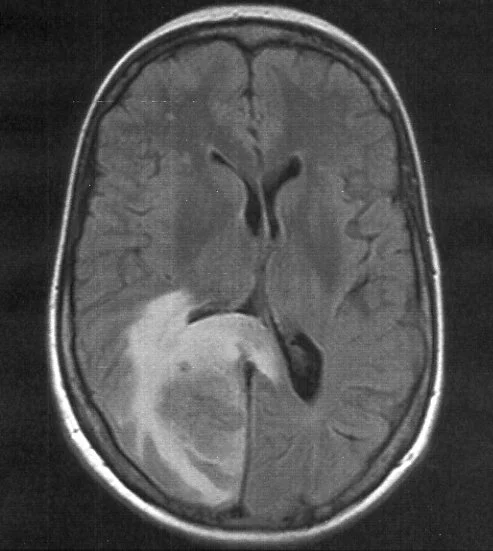
After surgery, the cavity almost always receives targeted radiation (stereotactic, on the cavity itself), because microscopic cells may remain. Radiation of the whole brain is no longer the standard for this.
3. Targeted radiation (radiosurgery)
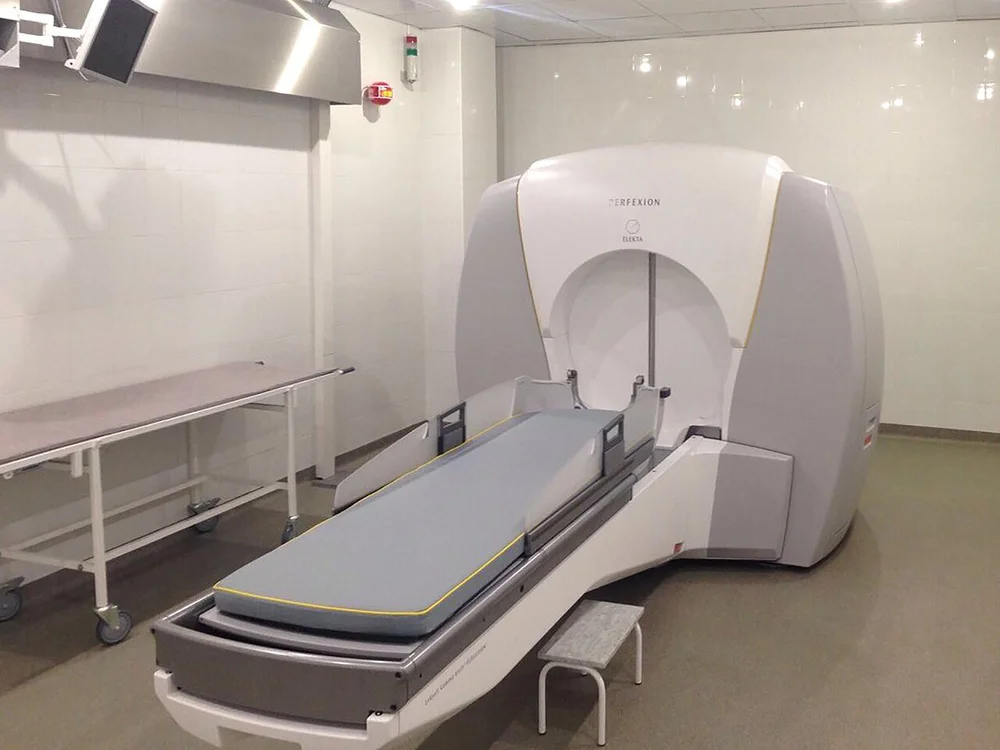
With one to four metastases, very precise, high-dose radiation of each lesion separately (stereotactic radiosurgery, e.g. Gamma Knife or LINAC) is the standard treatment, and it is often possible with more lesions too. This is done in one or a few sessions, without surgery, and spares healthy brain tissue.
4. Whole-brain radiation
This is used less nowadays, because it has more effect on memory and concentration. It remains an option when there are many metastases. If it is used, the hippocampus (the memory centre) is spared where possible and memantine is given to protect memory.
5. Treatment of the cancer itself
For certain cancer types, targeted therapy and immunotherapy are increasingly effective, including on metastases in the brain: for example in melanoma, lung cancer with an EGFR or ALK alteration, and HER2-positive breast cancer. For small metastases without symptoms, the team may in those cases decide to give this treatment first and postpone radiation or surgery, under strict MRI monitoring. Your oncologist determines whether this applies to you. Conventional chemotherapy generally reaches the brain less well.
What can I expect?
An honest answer requires nuance. Brain metastases mean that the cancer has spread, and in most cases a cure is not possible. But the outlook has improved considerably in recent years, and varies enormously from person to person. It depends mainly on the type of cancer, whether the cancer elsewhere is under control, your general condition, your age and the number of metastases.
The aim of treatment is to keep the metastases in the brain under control, preserve your functions (moving, speaking, thinking) as well as possible and protect your quality of life. In many patients this succeeds for a long time. Your oncologist and neurosurgeon will discuss your personal situation openly with you; please feel free to ask any question you have.
Follow-up
After treatment, an MRI of the brain is done every three months to detect new lesions or regrowth early. Small new metastases can then usually be treated again with targeted radiation.
Frequently asked questions
Why is not everyone operated on?
Surgery only makes sense if its benefits outweigh the risks. For small lesions, lesions in hard-to-reach places or multiple metastases, radiosurgery gives as much or more control without the burden of an operation.
What are the risks of brain surgery?
Besides the general risks (infection, post-operative bleeding), there is a small risk of temporary or permanent loss of function, depending on the location of the tumour. This is discussed beforehand with each patient. Most patients can leave hospital a few days after the procedure.
How long do I need to take steroids?
As short as possible. After surgery or radiation, they are gradually tapered off. Steroids cause side effects in the longer term (weight gain, sleep problems, muscle weakness, raised blood sugar); that is why relieving the pressure on the brain is also a goal in itself.
Can I drive?
After brain surgery or an epileptic seizure, you are legally not allowed to drive for the time being. Your fitness to drive is reassessed later, in consultation with your doctor and the CARA (the Belgian centre for fitness to drive).
Can I still work and exercise?
That depends on your symptoms and the treatment. Physical activity is recommended. Return to work is assessed individually, often in consultation with the occupational physician.
Who can I talk to about the diagnosis?
Besides your treating doctors, the oncology nurse, the psychologist and the hospital's social services are there for you and your loved ones. You are welcome to bring someone you trust to the consultations.