
home > treatments > carpal tunnel syndrome
Carpal tunnel syndrome
Trapped nerve at the wrist
What is carpal tunnel syndrome?
At the wrist, the median nerve runs together with the flexor tendons of the fingers through a narrow passage: the carpal tunnel. The roof of that tunnel is a strong ligament. If the nerve becomes trapped there – due to swelling, overuse, hormonal factors or without a clear cause – carpal tunnel syndrome develops. It is the most common nerve entrapment there is.
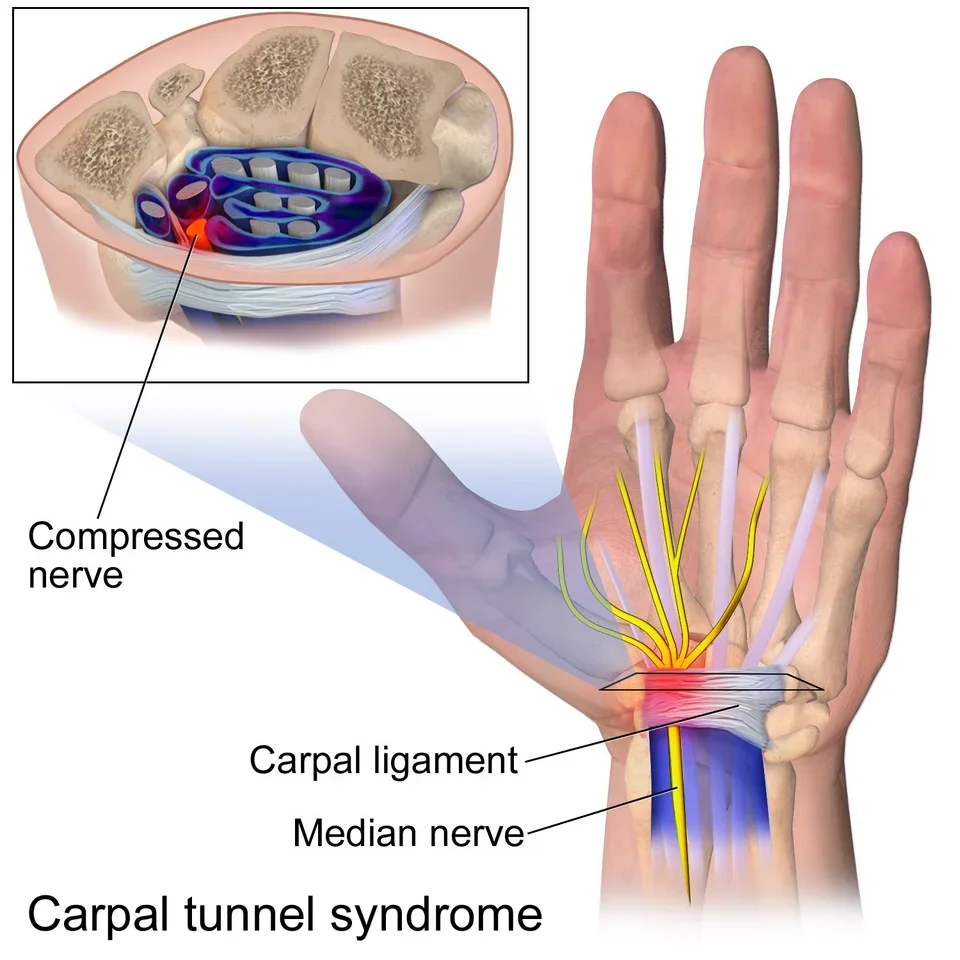
Known risk factors are being overweight, repetitive manual work, pregnancy and the menopause, rheumatoid conditions, diabetes and an underactive thyroid. Often there is no identifiable cause at all.
What symptoms does it cause?
- Tingling or numbness in the thumb, index finger, middle finger and half of the ring finger
- Mainly at night and on waking; many patients "shake out" their hand to get the feeling back
- Symptoms when cycling, using the phone, reading the newspaper or holding the steering wheel
- Later: clumsiness, dropping things, loss of strength and wasting of the muscles at the base of the thumb
Tingling in the little finger and ring finger fits better with entrapment of the ulnar nerve at the elbow. Radiating pain from the neck, with tingling in the whole hand, may also point to a cervical disc herniation. Both can occur together.
How is the diagnosis made?
Your history and the physical examination are the most important. No single test (such as tapping on the wrist or holding the wrist bent) is reliable enough on its own; it is the combination that counts. Wasting of the muscles at the base of the thumb strongly suggests long-standing, severe entrapment.
A nerve conduction study (EMG) confirms the diagnosis, measures how severely the nerve is affected and rules out other causes, such as a problem in the neck or a generalised nerve condition. We usually request this test before an operation. An ultrasound or MRI of the wrist is not routinely needed; these are only requested if the history is atypical or a space-occupying lesion in the tunnel is suspected.
Does this need surgery?
Not always. Up to a third of patients improve spontaneously, particularly when a temporary cause is involved, such as pregnancy. With mild or recent symptoms we therefore start without surgery.
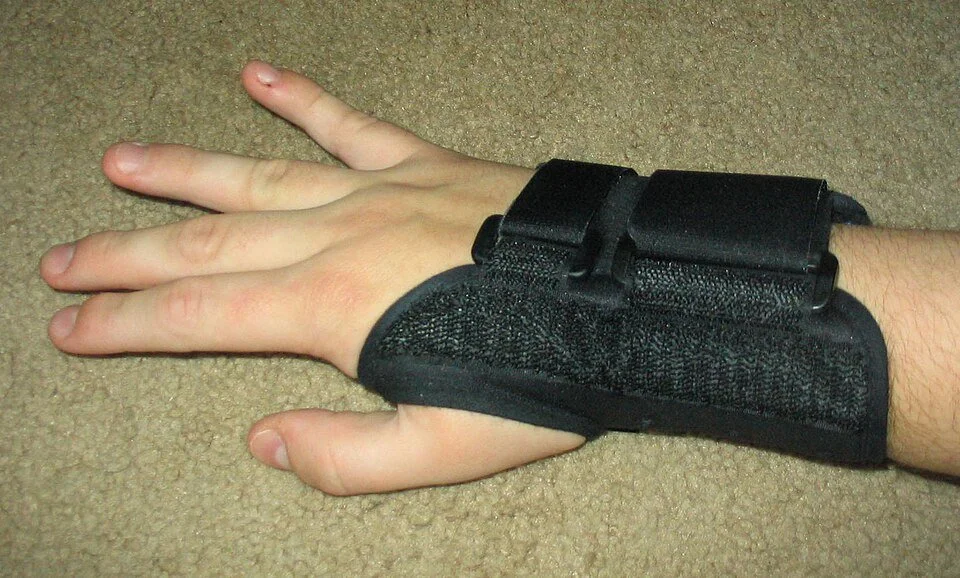
Night splint
A splint that keeps the wrist straight at night is cheap and safe. However, the evidence that it clearly reduces symptoms is limited: in pooled research the effect is small. It is mainly a reasonable first step for those who want to postpone an injection or operation.
Corticosteroid injection
An injection of corticosteroid into the carpal tunnel clearly improves symptoms and hand function during the first months. In many patients the effect is temporary: in research with one year of follow-up, a majority of patients who had an injection eventually needed an operation after all, although in some it was avoided or postponed. An injection is therefore a good option for moderate symptoms, during pregnancy or if you would rather postpone an operation.
What does not help
Anti-inflammatories, water tablets (diuretics), vitamin B6 and magnetic bracelets do no better than a placebo. A short course of corticosteroid tablets can help temporarily, but is rarely used because of the side effects.
When to operate?
An operation is suggested for persistent symptoms despite the steps above, a clearly abnormal EMG, or loss of strength and wasting of the muscles at the base of the thumb. In these situations, an operation gives a better result after six and twelve months than a splint, medication or a single injection. With long-standing numbness or muscle wasting, waiting is a disadvantage: the nerve then does not always recover fully.
What does the operation involve?
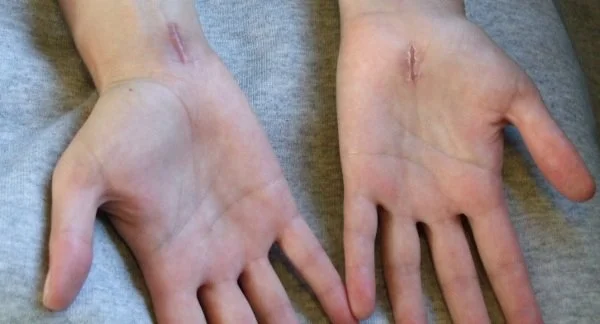
The procedure is called a carpal tunnel release. Through a small incision in the palm, the ligament forming the roof of the tunnel is divided, giving the nerve room permanently. It is a short, tissue-sparing procedure of about a quarter of an hour, under local anaesthesia, as a day case. You go home the same day, with a dressing and without a cast.
The procedure can also be done endoscopically, using a camera through a small opening. The effect on symptoms, the chance of recurrence and the number of repeat operations after one year are the same as with the open technique. Patients operated endoscopically return to work on average a week earlier and have slightly fewer minor complaints, but the quality of that evidence is low. Which technique is suitable for you depends on your anatomy and is discussed at the consultation.
If both hands are affected, we usually operate on the more troublesome hand first, so that you can keep using the other one. The second follows a few weeks later.
What are the risks?
Bleeding after the operation, infection, a sensitive scar or pain at the edges of the palm when leaning on the hand (so-called "pillar pain", which usually disappears after a few weeks to months). Rare: injury to a small sensory nerve branch or to the nerve itself, or incomplete release causing the symptoms to persist. Long-standing numbness or muscle wasting does not always recover fully, even after a successful procedure.
What is the recovery like?
You can move your fingers straight away; this prevents stiffness and swelling. Immobilising the wrist after the operation has been shown to offer no added benefit, and routine physiotherapy is not necessary: a simple home exercise programme is enough. The tingling at night often disappears within a few days. Light activities are possible after a few days, desk work and driving after one to two weeks, heavy loading of the palm after about four weeks. Numbness that has been present for a long time recovers more slowly, at the pace at which the nerve itself recovers, and sometimes incompletely.
Frequently asked questions
Can both hands be operated on at the same time?
We usually treat one hand first, so that you can use the other. The second follows shortly afterwards. Both hands at the same time is possible, but is only chosen after discussion.
How quickly does the tingling disappear?
The night-time symptoms often within days. Numbness during the day recovers more slowly, sometimes over months, and not always fully with long-standing entrapment.
Does it come back after the operation?
Rarely. The divided ligament heals in a wider position, so the tunnel remains permanently roomier. Persistent symptoms after an operation are more often due to permanent nerve damage from before the procedure than to a new entrapment.
I am pregnant and have tingling hands. Do I need an operation?
Almost never. Symptoms during pregnancy usually disappear after the birth. A night splint or, if needed, an injection can bridge that period.
Is an injection an alternative to an operation?
For moderate symptoms, yes, especially in the short term. In many patients, however, the symptoms return after a few months. With loss of strength or a clearly abnormal EMG, an operation is the better choice.
Do I need to see a physiotherapist after the operation?
Not routinely. Moving your hand yourself from day one and a simple exercise plan are enough. Physiotherapy is only suggested if there is stiffness or slow recovery.